








Stainless Steel Prep Tables: Top 3 Perfect Picks
Why Your Kitchen Deserves a Workhorse Surface
Stainless steel prep tables are the backbone of professional kitchens, from busy Dallas restaurants to food trucks. They’re built to handle daily abuse while keeping your workspace hygienic and organized.
Quick Answer: Choosing the Right Stainless Steel Prep Table
When selecting a commercial prep table, focus on these essentials:
- Steel Grade: Type 304 for wet areas and food contact (superior corrosion resistance), Type 430 for dry storage (budget-friendly).
- Gauge: 14-gauge for heavy equipment (500+ lbs capacity), 16-gauge for general prep (350 lbs), 18-gauge for light duty (200 lbs).
- Features: NSF certification (non-negotiable for commercial use), adjustable feet or casters, undershelves for storage.
- Size: Standard options range from 24×24″ to 96×30″, with a 35-36″ standard height.
- Base Style: Open base for easy cleaning, enclosed cabinet for storage, or mobile with locking casters.
The right prep table is the foundation of your kitchen’s efficiency. These surfaces resist heat, corrosion, and bacteria while standing up to years of heavy use. The market agrees: stainless steel tables hit a value of roughly $1.2 billion in 2024 and are a dominant force in the commercial foodservice equipment market. Chefs and owners know a proper prep surface isn’t just furniture—it’s an investment in food safety, workflow, and long-term durability.
Why Stainless Steel is the Undisputed Champion of the Commercial Kitchen
Walk into any professional kitchen—from a busy Dallas restaurant to a food truck—and you’ll see gleaming stainless steel prep tables anchoring the operation. They are the industry standard for good reason.
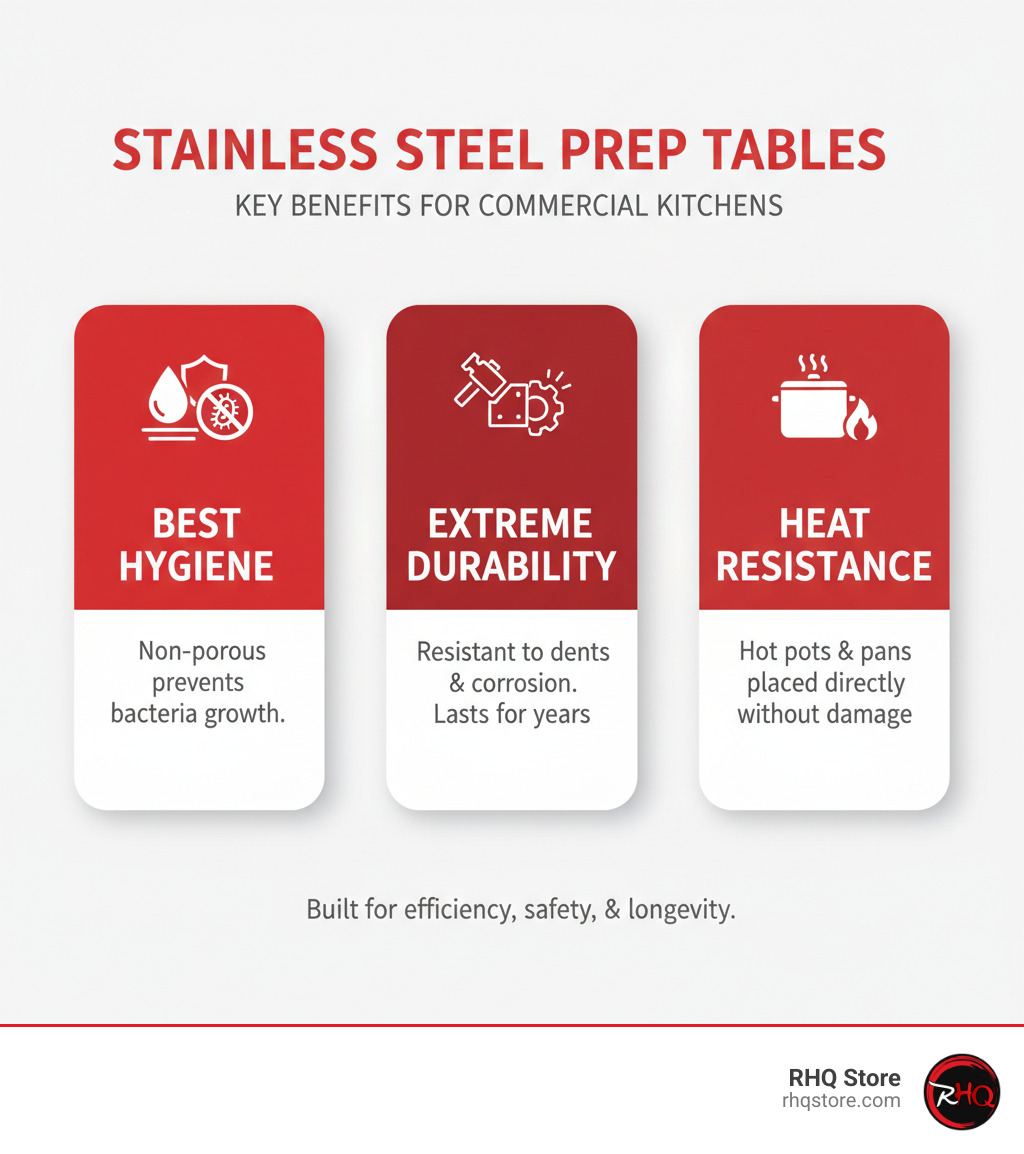
These tables are workhorses engineered for commercial cooking. The non-porous surface prevents liquids and bacteria from seeping in, making cleanup fast and effective. This is critical when every moment counts during a dinner rush.
Heat resistance is another key benefit. You can set a scorching pan directly on the table without worrying about warping, discoloration, or cracking. The material’s corrosion resistance also ensures it stands up to acidic ingredients and harsh cleaning chemicals, maintaining a professional look for years.
Restaurant owners and kitchen managers consistently choose these tables because they simply outlast and outperform every alternative. If you’re curious about what goes into making these essential pieces, The Art of Stainless Steel Fabrication offers a fascinating look behind the scenes. You can also explore more data on the stainless steel tables market to see their importance across the foodservice industry.
The Gold Standard for Hygiene and Food Safety
Food safety allows no room for compromise. Stainless steel prep tables are the industry standard because their surface is completely non-porous. Unlike wood or plastic, which can develop grooves that harbor contaminants, stainless steel stays smooth. Bacteria, mold, and mildew have nowhere to hide, ensuring a truly clean surface after wiping.
Health inspectors look for NSF certification on kitchen equipment. This independent certification guarantees the table meets strict public health standards for design and sanitation, preventing bacterial growth. It’s often a requirement for commercial food service, and top-selling models move over 400 units monthly on major equipment sites. You can explore detailed sales data on commercial kitchen equipment to see what other professionals are choosing.
Daily cleaning is simple: mild soap, warm water, and a quick wipe. This straightforward routine allows your staff to maintain spotless work surfaces without sacrificing prep time.
Built for Best Durability and Longevity
Commercial kitchens are demanding environments where equipment gets bumped, dragged, and hit. Your prep tables must withstand this punishment.
Stainless steel prep tables are built for this abuse. Most commercial models use 16-gauge or 18-gauge stainless steel, which is thick enough to resist the dents and scratches that would destroy lesser materials. This durability is crucial in high-volume settings like a busy North Texas restaurant or a food truck facing constant movement and temperature swings.
The investment pays off over years. While cheaper alternatives might save money upfront, they often need replacement within a year or two. A quality stainless steel table, however, will still be going strong a decade later, protecting your bottom line and keeping your kitchen running smoothly.
Decoding the Anatomy of Stainless Steel Prep Tables
Understanding the details of stainless steel prep tables ensures you get a workhorse, not a headache. The material quality, construction, and certifications determine how your table will perform.
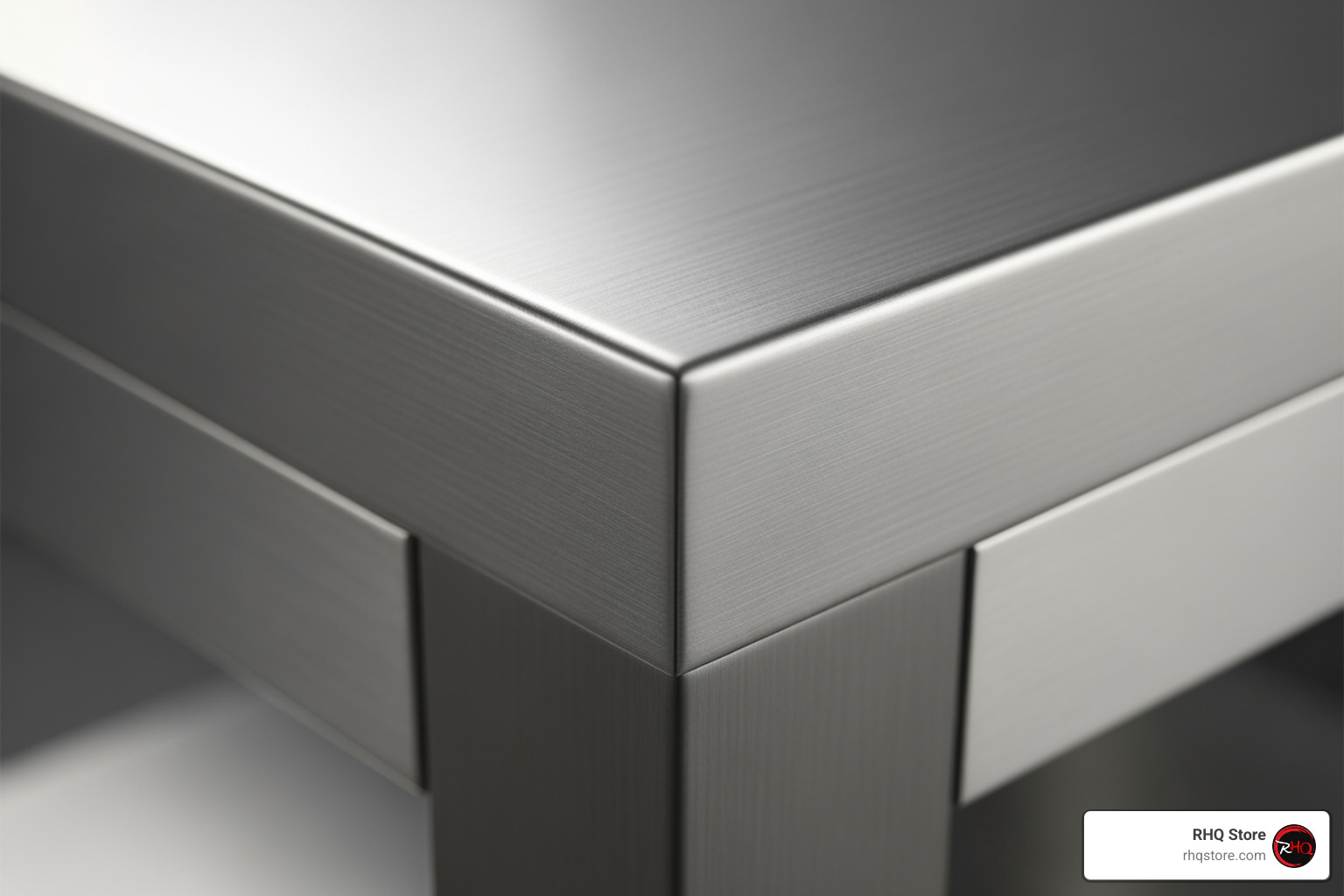
The anatomy comes down to the steel grade (type of steel), the gauge (thickness), and NSF certification. These specifications directly impact durability, rust resistance, and longevity.
Steel Grade: Type 304 vs. Type 430
Not all stainless steel is the same. The two most common grades are Type 304 and Type 430, and the difference matters.
Type 304 stainless steel is the premium option. It contains more nickel, giving it superior resistance to rust and corrosion. This makes it the best choice for any surface that will face moisture, acidic foods, or harsh cleaning chemicals. If you’re prepping ingredients directly on the surface or working in a humid environment, Type 304 is worth the investment.
Type 430 stainless steel is a more budget-conscious choice. It offers decent corrosion resistance but is better suited for drier applications like equipment stands or dry storage areas. While it’s a solid performer in the right conditions, it can show rust if constantly exposed to moisture. Standard tables often use a Type 430 top with galvanized legs to keep costs down.
Bottom line: For wet areas or direct food contact, choose Type 304. For dry storage, Type 430 is a cost-effective solution.
Steel Gauge: Understanding Thickness and Strength
Gauge refers to the steel’s thickness. Counterintuitively, a lower gauge number means thicker, stronger steel. A 14-gauge table is a tank, while an 18-gauge table is lighter and less robust.
Most commercial stainless steel prep tables are 16-gauge or 18-gauge. Gridmann tables, for instance, offer both options. Standard tables typically have a weight capacity around 600 lbs, while deluxe models can handle 750 lbs or more.
Here’s how the gauges compare:
| Gauge Number | Thickness (Relative) | Typical Load Capacity (Top / Undershelf) | Best Use Case |
|---|---|---|---|
| 14-Gauge | Thickest | 500+ lbs / 250+ lbs | Heavy equipment (mixers, slicers), high-impact tasks |
| 16-Gauge | Medium | 350 lbs / 150 lbs | General food preparation, daily heavy use |
| 18-Gauge | Thinner | 200 lbs / 80 lbs | Light duty prep, dry storage, budget-conscious |
If you plan to place a heavy mixer or meat slicer on your table, you need 14-gauge thickness. For everyday prep work like chopping and plating, 16-gauge offers the best balance of durability and cost. For light-duty tasks or dry storage, 18-gauge is a sufficient and economical choice.
Match the gauge to your needs. Skimping on gauge for heavy-duty work will lead to a bent, warped table.
Finding Your Perfect Fit: Types, Sizes, and Features
Choosing the right stainless steel prep table means tailoring it to your kitchen’s layout and workflow. A well-chosen table can streamline operations, improve food safety, and boost staff morale. When planning your space, it helps to understand the principles of Restaurant Kitchen Design.
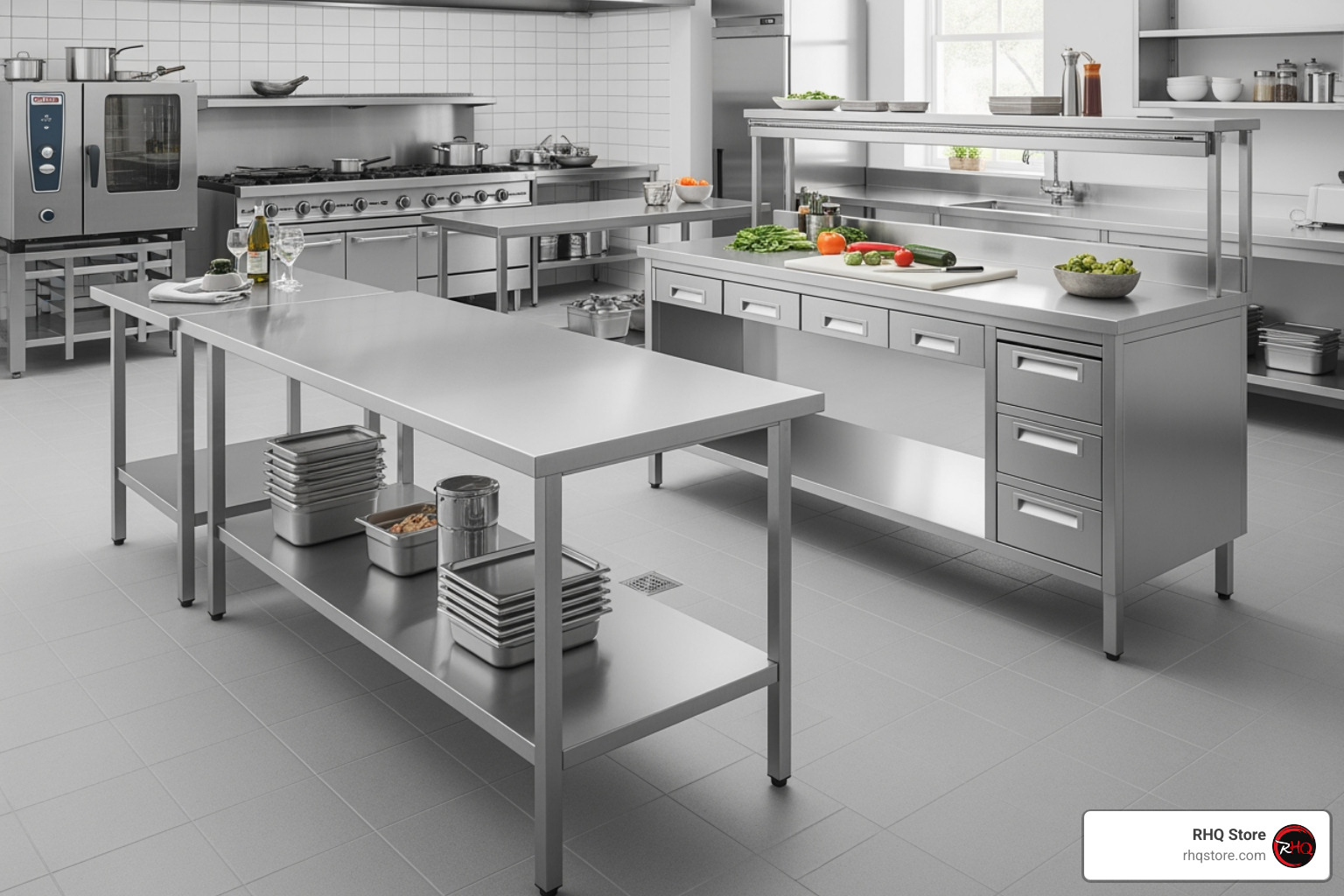
Choosing the Right Type of Stainless Steel Prep Tables
Stainless steel prep tables come in various forms to suit different needs.
- Standard work tables offer a simple, flat surface for general prep and often include an adjustable undershelf.
- Tables with undershelves provide dedicated storage for ingredients, small appliances, or supplies, keeping the kitchen organized.
- Enclosed cabinet base tables feature sliding or hinged doors to conceal stored items, offering a cleaner look for open kitchens.
- Mobile tables with casters add flexibility, allowing you to reconfigure workstations or clean hard-to-reach areas. Ensure they have locking wheels for stability.
- Tables with integrated sinks create all-in-one workstations for washing and prepping, streamlining workflow.
- Specialty tables, like a Turbo Air Salad Sandwich Prep Table, are engineered for specific tasks with features like refrigerated rails and cutting boards.
Essential Features for Your Stainless Steel Prep Tables
Fine-tune your choice with features that improve utility and safety.
- Backsplashes: Essential for tables against a wall, these vertical extensions (1-10 inches) prevent spills and splashes.
- Adjustable feet: Ensure a stable, level work surface on uneven floors.
- Casters: Provide mobility. Look for sets with at least two locking brakes for safety.
- Edge type: A square edge is standard for general prep. A marine edge has a raised lip to contain spills, ideal for wet prep. A bull nose edge is rounded for safety in busy areas.
- Undershelves and Drawers: Undershelves offer open storage, while drawers keep tools and utensils organized and within reach.
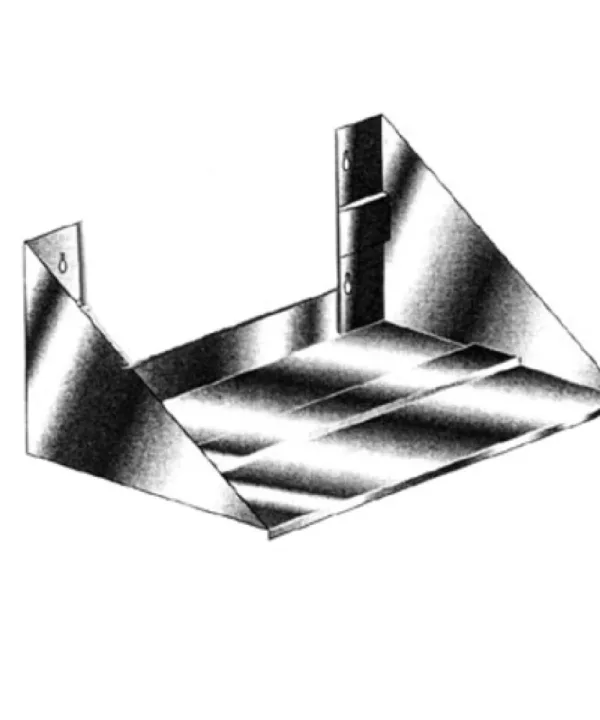
- Overshelves: Create vertical storage above the work surface for frequently used items.
Specialized equipment stands like the Atosa Mixrite Equipment Stand are often used alongside prep tables to hold heavy appliances, keeping the main work surface clear.
Sizing and Capacity Considerations
Table dimensions directly impact your kitchen’s workflow. We recommend at least 36 inches of clear space around tables for safe movement.
Common sizes range from 24×36 inches to 96×30 inches, allowing you to maximize any space. The standard height is 35-36 inches, an ergonomic design for standing tasks that reduces staff strain.
Load capacity is critical for heavy equipment. Standard tables hold around 600 lbs, while heavy-duty 14-gauge models can support 750 lbs or more. Always consider the weight of your heaviest items, from mixers to bulk ingredients. When planning, think about how tables will integrate with other Commercial Kitchen Equipment to create a cohesive workspace.
Assembly, Care, and Common Accessories
Proper setup and regular care will ensure your stainless steel prep tables serve you faithfully for years. Maintaining these tables is straightforward, and a few smart accessories can improve their functionality.
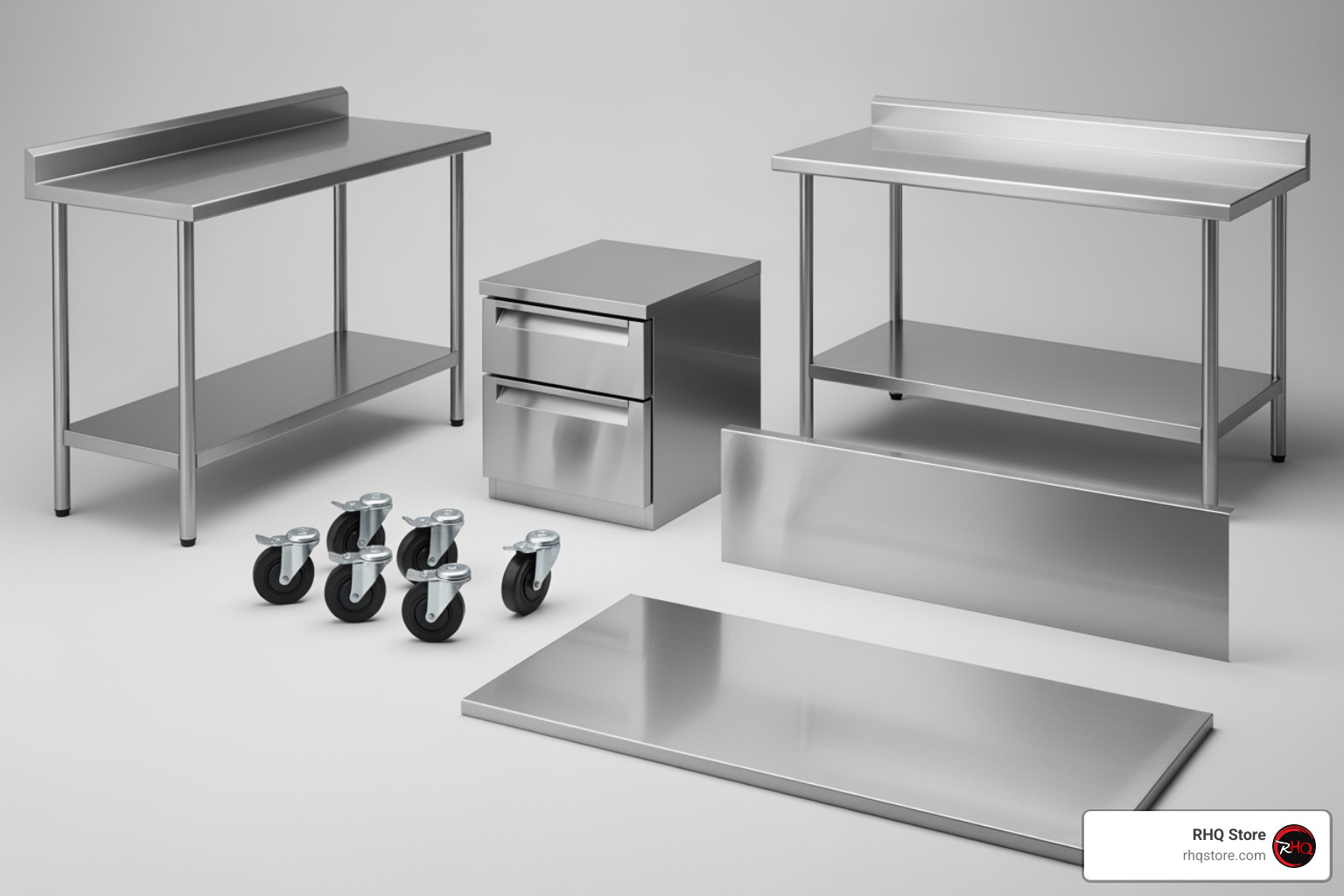
Assembly and Daily Maintenance
Most tables arrive “knock-down” (flat-packed) and require simple assembly, typically taking 20-30 minutes. Heavy-duty models may have a fully welded base, arriving ready to use.
The beauty of stainless steel is its ease of cleaning. At the end of each shift, wipe the surface with a soft cloth, mild soap, and warm water. Always wipe in the direction of the grain to prevent streaking. Afterward, dry the table completely with a clean cloth to prevent water spots and mineral deposits.
Avoid harsh abrasives like steel wool or scouring pads, which will scratch the surface and create places for bacteria to hide. Also, skip chlorine-based cleaners, bleach, and oven cleaners, as these aggressive chemicals can cause pitting and discoloration, shortening the table’s lifespan.
Popular Accessories to Improve Functionality
Customize your table with accessories to create a highly efficient workstation.
- Overshelves: Mount above the tabletop for vertical storage of spices, tools, or plates.
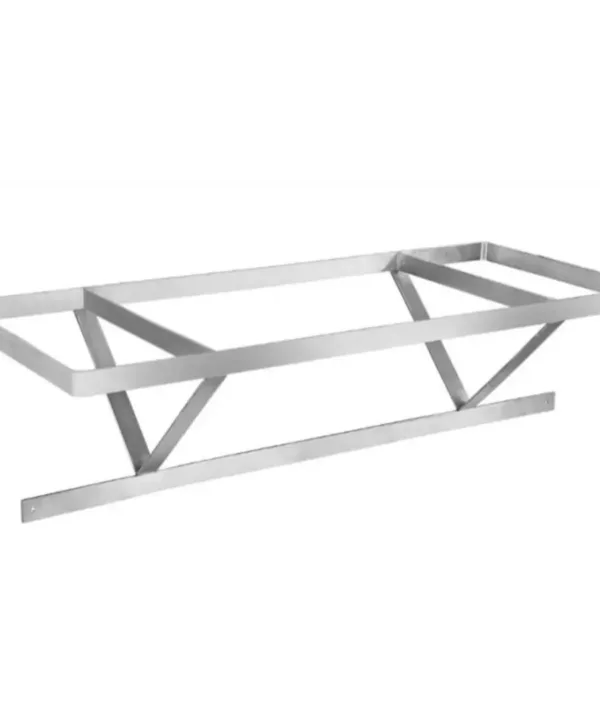
- Pot racks: Provide convenient overhead storage for cookware, freeing up your prep surface.
- Drawers: Add enclosed storage for knives and utensils. Look for removable units for easy cleaning.
- Cutting board attachments: Integrate a poly cutting surface for dedicated knife work without scratching the steel.
- Locking casters: Turn a stationary table into a mobile unit, perfect for cleaning and reconfiguring your layout.
- Urn troughs: Catch drips and spills at beverage stations.
- Grommet holes: Keep electrical cords for small appliances organized and off the work surface.
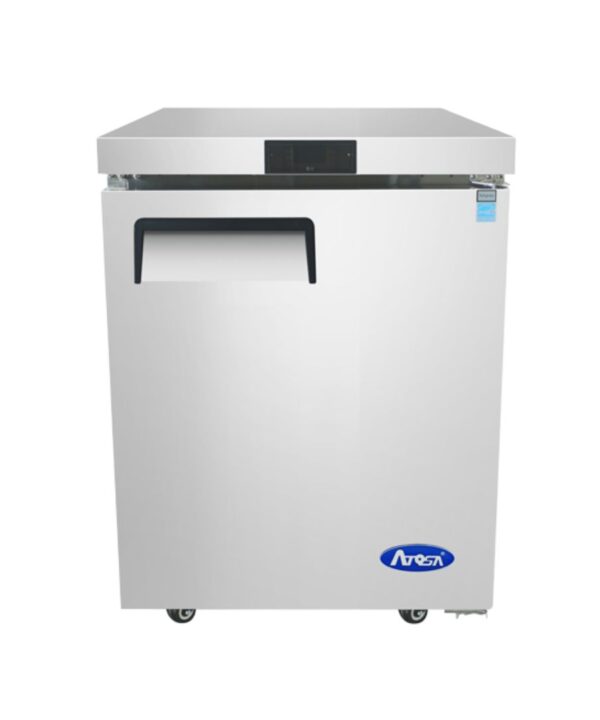
Positioning your table near an Atosa Undercounter Refrigerator creates a seamless workflow from cold storage to prep, cutting down on unnecessary steps during service.
Frequently Asked Questions about Commercial Prep Tables
Understanding the details of stainless steel prep tables helps you make a smarter investment for your business. Here are answers to some common questions.
What does NSF Certified mean for a prep table?
NSF certification means an independent organization has tested the table to ensure it meets strict public health and safety standards. A certified table is verified as safe for direct food contact, easy to clean and sanitize, and built without cracks or crevices where bacteria can grow. Health inspectors in Dallas and across Texas look for the NSF mark, making it a non-negotiable requirement for any commercial food service operation.
How much do stainless steel prep tables cost?
Prices vary based on size, gauge, steel grade, and features. A small, light-duty 18-gauge table might start around $150, with some e-commerce options as low as $68.99 to $159.99. A mid-range table with an undershelf typically falls between $175 and $500. For a large, heavy-duty 14-gauge table with a Type 304 top and an enclosed cabinet base, you could spend over $1,000. Specialized units with integrated sinks or refrigeration can cost $3,500 or more. Balance your budget with your kitchen’s workload and long-term needs.
Can I put hot pots and pans directly on a stainless steel table?
Yes. One of the greatest benefits of stainless steel prep tables is their impressive heat resistance. You can place hot pots, pans, and baking sheets directly on the surface without worrying about scorching, warping, or other damage. This feature helps speed up workflow in a busy commercial kitchen where every second counts.
Your First Choice For Stainless Steel Prep Tables
Choosing the right stainless steel prep tables is about building the foundation for an efficient, safe, and successful commercial kitchen. These tables are the undisputed champion for a reason: superior hygiene, remarkable durability, and a professional aesthetic.
Remember the key takeaways: Type 304 steel is best for wet areas and food contact, while Type 430 is a budget-friendly choice for dry storage. A lower gauge number means thicker, stronger steel for heavy-duty tasks. With a wide variety of types and features like backsplashes and marine edges, you can find the perfect match for your workflow.
A stainless steel prep table is one of the smartest investments you can make. It protects food safety, streamlines operations, and stands up to the demands of a professional kitchen. With simple care—mild soap, warm water, and wiping with the grain—it will serve your business faithfully for years.
At Restaurant Headquarters, we understand the unique demands of Texas kitchens. We’re here to help you find exactly what works for your culinary vision. Ready to build the foundation for your kitchen’s success? Explore our complete range of commercial kitchen supplies and find the difference that quality equipment makes.