










Casework: The 2 Ultimate Definitions
What Casework Really Means (And Why It Matters for Your Space)
Casework refers to two distinct practices: social work involving individual case management (first known use in 1892), and architectural woodwork consisting of box-shaped storage units like cabinets, cupboards, and display cases. In construction and design, casework specifically describes prefabricated or modular cabinetry used in commercial and residential spaces.
Quick Definition:
- Social Work Context: Direct consideration of individual or family problems, needs, and adjustments through investigation, advice, and supervision
- Construction Context: Box-shaped furniture and storage units, including base cabinets, wall cabinets, drawers, and display cases
- Key Distinction: Casework is typically mass-produced and modular, while millwork is custom-made to specific dimensions
If you’ve ever walked into a restaurant and admired the sleek storage behind the bar, the neat hostess stand, or the built-in display cases showcasing desserts, you’ve seen casework in action. But the term itself can be confusing—it means completely different things depending on who’s using it.
This article focuses on architectural casework—the physical structures that organize, store, and display items in commercial spaces. We’ll explore what sets casework apart from millwork, the standards that govern quality, and how these systems work in real-world restaurant environments.
I’m William Chen, CEO of Restaurant Headquarters, and over the past decade I’ve designed and fabricated casework solutions for more than 1,000 restaurant projects across Texas, helping owners balance functionality, aesthetics, and budget. Understanding the difference between modular casework and custom millwork has saved my clients thousands of dollars and weeks of construction time.
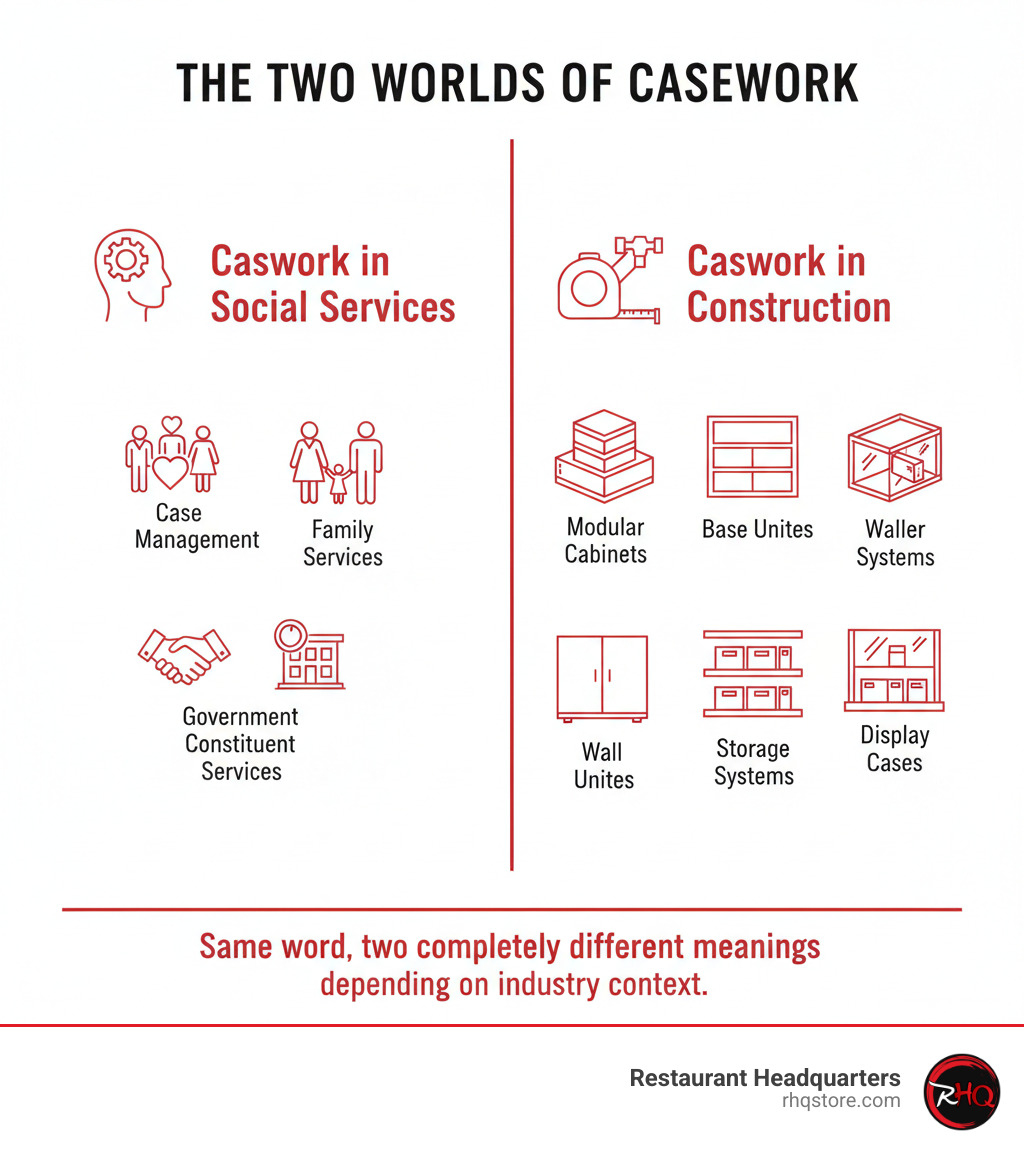
The Two Worlds of Casework: People vs. Products
Here’s where things get interesting: the word “casework” leads a double life. Depending on who you’re talking to, it could mean helping someone steer government benefits or building the perfect set of cabinets for a restaurant kitchen. While we at Restaurant Headquarters spend our days focused on the construction side, understanding both meanings gives you the full picture.
According to Merriam-Webster, casework has two distinct definitions that couldn’t be more different. On one hand, it’s “social work involving direct consideration of the problems, needs, and adjustments of the individual case.” On the other, it refers to expertly crafted box-shaped furniture and cabinetry. This dual meaning has been around since 1892, showing just how versatile this term really is.
Casework in Social Work and Government
In social services, casework is all about people. It’s the hands-on work that social workers and government staff do when they investigate, advise, and support individuals or families facing challenges. A social worker helping a Dallas family access state assistance programs? That’s casework. A constituent services representative in Plano helping a veteran sort out VA benefits? Also casework.
This type of work involves a close study of psychological and sociological factors to improve personal and family conditions. In government settings, particularly at the Congressional level, casework allows elected officials and their staff to act as facilitators between constituents and federal agencies. This authority comes from Congress’s Article I power to make laws and the First Amendment right to petition the government.
But governmental casework comes with strict ethical boundaries. Staff can request information, urge prompt consideration, arrange appointments, and ask agencies to reconsider decisions. However, they’re prohibited from helping constituents commit crimes, improperly pressuring agencies, engaging in one-sided communications without all parties present, acting as an attorney, or prioritizing cases based on campaign contributions.
Beyond direct intervention, government caseworkers also educate constituents about federal programs, translate bureaucratic jargon, and simply listen to concerns. The goal is resolution—either solving the problem or determining that no further assistance is possible. You can read more about this side of the term in this Encyclopedia article about casework.
Architectural Casework in Design and Construction
Now let’s talk about the casework we know best: the physical kind. In construction and design, architectural casework refers to box-shaped furniture and storage units—cabinets, cupboards, drawers, shelving units, and display cases. These are the essential building blocks of organization and functionality in commercial spaces, especially restaurants.
Unlike the people-focused work of social casework, architectural casework is all about precise fabrication, durable materials, and smart design. It falls under the broader category of architectural woodwork, which includes almost any wood product built into or attached to a building. While shelves, paneling, and trim count as woodwork, they only become casework when they form a box-like storage unit.
In the restaurant world, casework is absolutely essential. It creates the backbone for everything from an organized kitchen prep area to an inviting display at the front of house. Think about the display cases showcasing fresh pastries in a Frisco bakery, or the sturdy storage units behind the bar in a Garland restaurant. These aren’t just functional pieces—they’re integral to your operation’s flow and your space’s overall design.
Most architectural casework is prefabricated or modular, meaning it’s built in standard sizes that can be mixed and matched to fit your space. This modular approach offers flexibility and cost savings compared to completely custom solutions. At Restaurant Headquarters, we understand that choosing the right casework for your restaurant isn’t just about storage—it’s about creating a space that works seamlessly for your team and impresses your guests. We offer Custom Fabrication Services for Restaurants to ensure every piece fits your unique needs perfectly.
Architectural Casework vs. Millwork: A Detailed Comparison
If you’ve ever felt confused by the terms “casework” and “millwork,” you’re not alone. I hear this question almost weekly from restaurant owners planning their buildouts. The truth is, while both involve woodwork and both can transform your space, they’re fundamentally different approaches—and choosing the wrong one can cost you thousands of dollars or delay your opening by weeks.
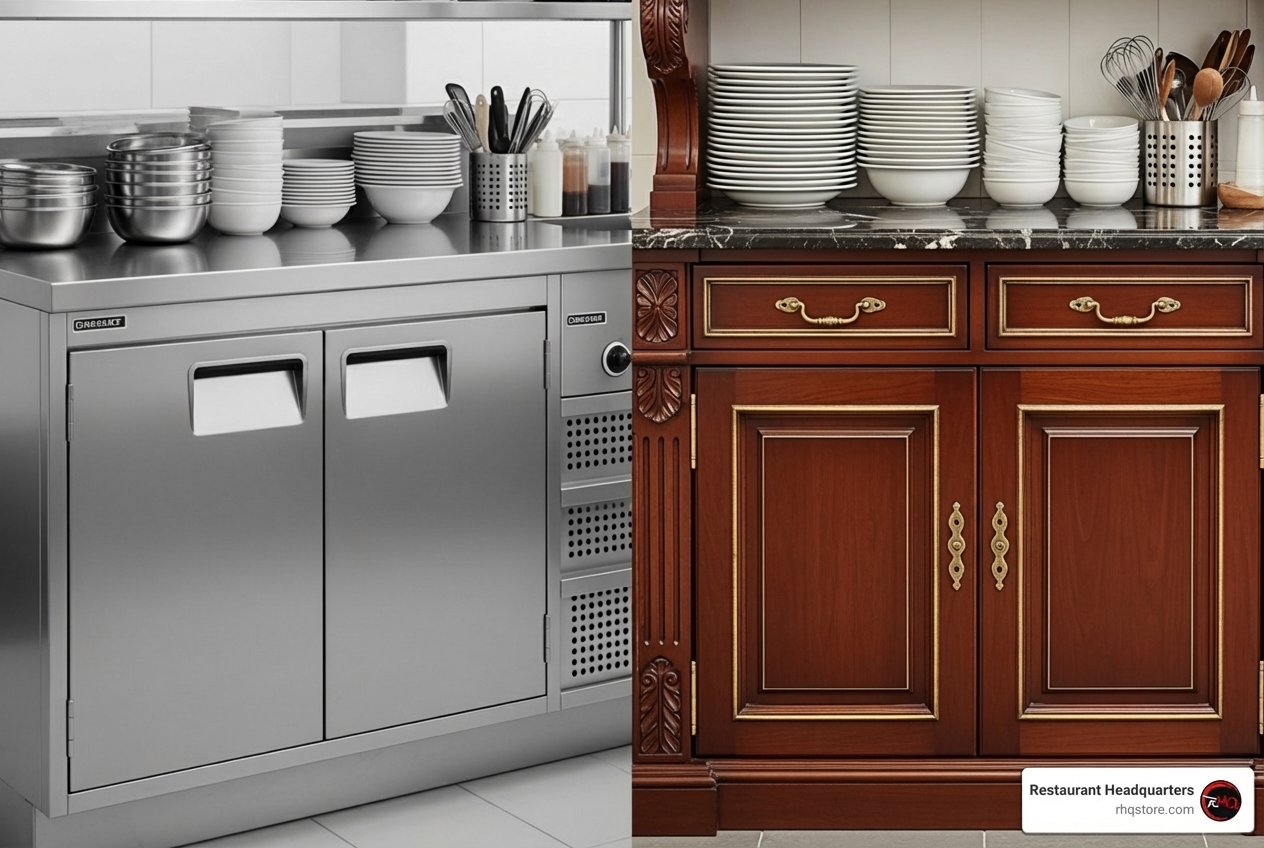
At Restaurant Headquarters, we work with both casework and millwork daily, and here’s what I tell every client: neither is inherently better. It’s about matching the right solution to your specific needs, whether that’s a tight budget and quick timeline or a signature design element that’ll make your restaurant unforgettable.
Think of it this way: casework is like buying a well-made suit off the rack—it fits most people, looks professional, and you can wear it tomorrow. Millwork is like having that suit custom-custom by a master craftsman—it fits you perfectly, reflects your personal style, and takes a bit longer to create. We’ve put together a comprehensive guide on How to Select the Best Commercial Millwork for Your Project that digs even deeper into this decision.
Key Differences in Production and Fit
The biggest difference between casework and millwork comes down to how they’re made and how they fit into your space.
Casework is manufactured in a factory setting, often in large quantities. Picture a production facility churning out cabinet boxes in standard sizes—18 inches wide, 24 inches wide, 36 inches wide, and so on. These units arrive at your restaurant already built, ready for quick assembly and installation. The modular design means you can mix and match pieces like building blocks, creating the layout you need from standardized components. Most importantly, these prefabricated units can stand alone or be grouped together, giving you flexibility to reconfigure your space down the road.
Millwork takes the opposite approach. Each piece is custom-made to your exact specifications, measured to fit your specific space down to the fraction of an inch. When we create millwork for a restaurant, we’re essentially building furniture that becomes part of the building itself. That ornate bar back with integrated lighting? That’s millwork. The seamless wall paneling that wraps around an awkward corner? Also millwork. These site-specific pieces are designed to integrate perfectly with your architecture, often becoming permanent fixtures that define your restaurant’s character.
For a new taco concept in Frisco that needs efficient back-of-house storage, casework makes perfect sense. For that same restaurant’s statement bar where guests will spend their entire evening, custom millwork might be worth the investment. Our custom millwork services showcase how we’ve helped restaurants across Texas create these signature pieces.
Materials, Quality, and Durability
Both casework and millwork can be built to last, but they differ in who controls the material choices and what options are available.
With casework, you’re working within the manufacturer’s specifications. You’ll typically choose from a range of finishes, colors, and materials—laminate surfaces in dozens of colors, powder-coated steel for durability, or stainless steel for kitchen environments. The manufacturer has already vetted these materials for consistent quality and performance. This manufacturer-controlled approach means every cabinet in your order will match perfectly, and you know exactly what you’re getting before it arrives.
Millwork gives you complete control over materials. Want that bar top crafted from reclaimed Texas oak? Done. Looking for exotic wood veneers that match your restaurant’s upscale aesthetic? We can source them. This client-controlled selection process allows for unique finishes and high-end options that simply aren’t available in standard casework lines. When you walk into a fine dining restaurant in Dallas and see rich mahogany paneling or hand-finished walnut cabinetry, that’s the power of custom millwork materials.
Cost, Flexibility, and Installation
Here’s where the rubber meets the road—your budget, timeline, and long-term plans will heavily influence which option makes sense.
Casework delivers significant advantages in affordability and speed. Because manufacturers produce these units in volume, the cost per piece is much lower than custom work. If you’re opening a fast-casual concept with tight margins, this difference can free up capital for equipment or marketing. The modular nature means units can be disassembled if you decide to expand or relocate—I’ve had clients reuse casework from one location in another, saving thousands on their second buildout. Installation is straightforward and quick, often taking days instead of weeks, which means you’re open and generating revenue sooner.
Millwork requires a higher investment upfront. The custom design process, specialized materials, and skilled craftsmanship all contribute to premium pricing. You’re also committing to a permanent fixture—once that custom bar is built into your space, it’s not moving without significant demolition and expense. The longer lead times for design, fabrication, and installation mean you need to plan further ahead, sometimes adding weeks to your construction schedule.
Here’s a quick comparison to help you see the trade-offs:
| Feature | Casework | Millwork |
|---|---|---|
| Production | Mass-produced, standardized, modular | Custom-made, bespoke, site-specific |
| Fit | One-size-fits-all, adjustable for fit | Made to exact dimensions, integrated |
| Cost | Generally lower, budget-friendly | Higher investment, premium pricing |
| Customization | Limited to standard options, finishes | Unlimited, unique designs |
| Installation | Quick, often DIY-friendly assembly | Longer, professional installation required |
| Flexibility | Highly flexible, reusable, reconfigurable | Less flexible, permanent fixture, harder to change |
| Materials | Manufacturer-controlled, consistent | Client-controlled, high-end options |
| Lead Times | Shorter | Longer |
| Liability | Manufacturer | Designer or client |
The smart restaurant owners we work with often use both. They’ll invest in stunning custom millwork for their dining room and bar—the spaces that define their brand—while using efficient casework for back-of-house storage, prep stations, and service areas where function matters more than form. This hybrid approach maximizes your budget while still creating those wow moments that keep guests coming back.
Understanding the Types and Standards of Architectural Casework
When you’re planning a restaurant build-out in Dallas or a renovation in Plano, you’ll quickly find that casework isn’t a one-size-fits-all solution. There’s a surprising amount of variety in types, designs, and quality standards that determine whether your storage systems will stand up to the daily demands of a busy commercial kitchen or dining room.
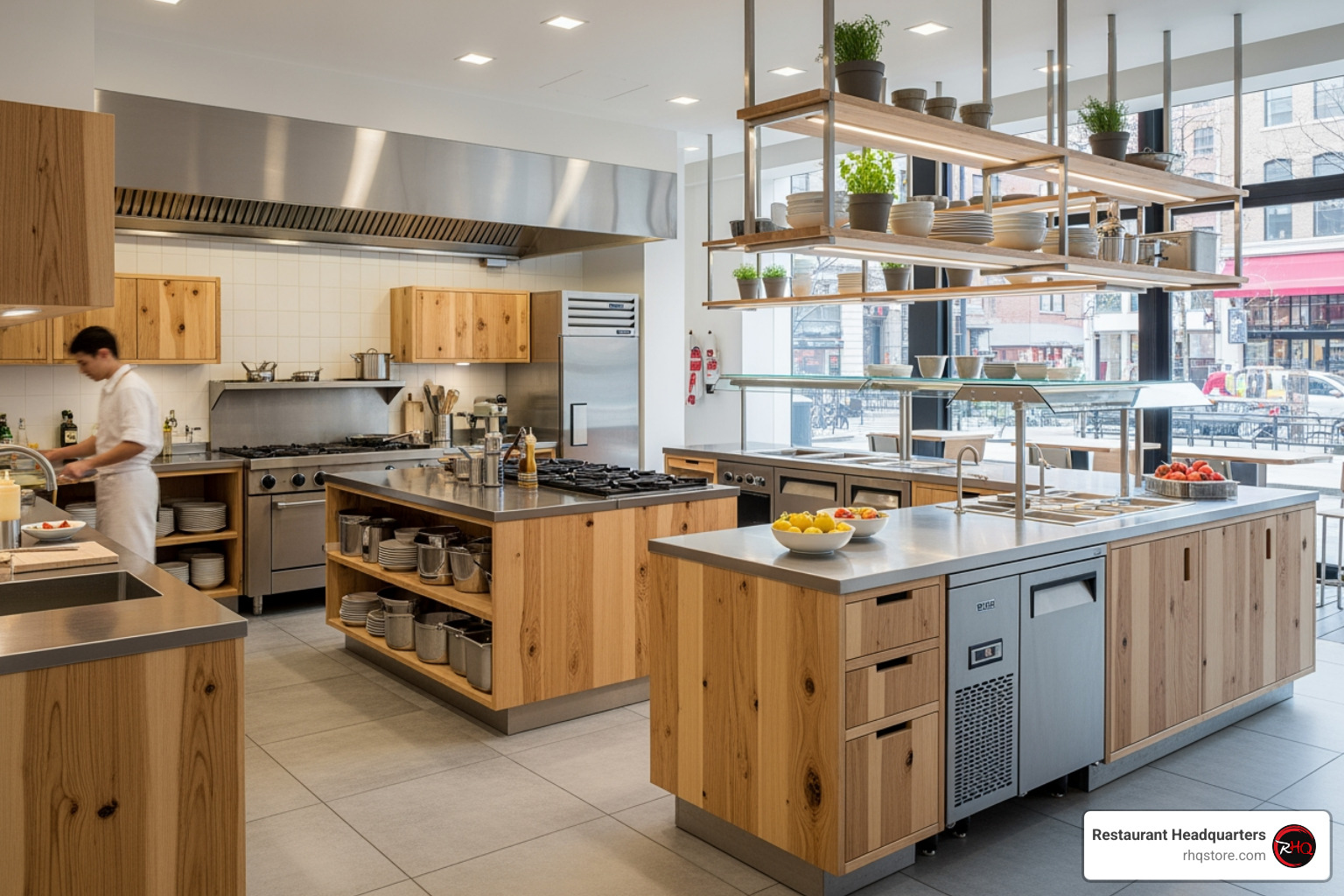
At Restaurant Headquarters, we’ve seen how the right casework system can transform a space—and how the wrong one can create ongoing headaches. That’s why we stay current with industry standards set by organizations like the Architectural Woodwork Institute (AWI). These aren’t just bureaucratic guidelines; they’re practical benchmarks that ensure your investment delivers the durability and functionality your restaurant needs. You can dig deeper into these standards through the AWI Standards Overview, but we’ll walk you through what really matters for your project.
The Rise of Modular Casework Systems
Think of modular casework as the LEGO blocks of commercial design. These prefabricated units snap together in countless configurations, giving you the freedom to adapt your space as your business evolves. We’ve helped restaurant owners across North Texas reconfigure their layouts without tearing everything down and starting over—that’s the beauty of modular systems.
The foundation of any modular system starts with base cabinets, the workhorses that sit on your floor and handle the heavy lifting. These units come with an impressive array of options: doors, drawers, vertical slots for sheet pans, wheels for mobility, and specialized sorters. You’ll find them available in hundreds of height, width, and depth combinations, so finding the right fit for your space is rarely a problem.
Above those base units, wall cabinets mount to walls or hang over islands and consoles, maximizing your vertical storage without eating up precious floor space. They’re available in standard sizes with various door configurations and shelf options. For those tricky corner areas, corner cabinets use filler pieces to create a seamless built-in appearance that makes every inch count.
The real advantage of modular casework lies in its flexibility and reusability. When you decide to expand your bar area or reconfigure your prep station, you can disassemble and reassemble these units without calling in a demolition crew. This adaptability has saved our Irving clients thousands of dollars when their operational needs changed six months after opening.
Installation speed is another major benefit. Since everything arrives prefabricated from the factory, your team isn’t waiting around for custom pieces to be built on-site. This means less downtime and faster turnaround from construction to opening day. The cost-effectiveness naturally follows—standardized production and quicker installation translate to lower overall expenses compared to fully custom solutions.
Many modular systems also feature shelves adjustable on one-inch increments and components designed for easy replacement if something gets damaged during service. We’ve even seen these systems earn LEED and Greenguard Children & Schools certifications thanks to their reusability and recycled content, which is a nice bonus if sustainability matters to your brand.
While modular casework is mass-produced, reputable manufacturers offer enough variety in components, accessories, and finishes that you can achieve a custom look without the custom price tag. We’ve integrated these approaches into our More info about Custom Millwork Projects to give clients the best of both worlds—the efficiency of modular systems with the polish of custom design.
AWI Compliance: Ensuring Quality in Your Casework
Quality in casework isn’t subjective—it’s measurable. The Architectural Woodwork Institute maintains comprehensive guidelines through their ANSI/AWI 0641 standard that define exactly what durability, functionality, and aesthetic appeal should look like in architectural wood casework. For restaurant owners, understanding these standards means knowing your investment will hold up under real-world conditions.
While AWI compliance isn’t always legally mandated, it represents industry best practices that most clients expect. At Restaurant Headquarters, we won’t compromise on these standards because we’ve seen what happens when casework doesn’t meet them—warped doors, failing hinges, and finishes that can’t handle daily cleaning.
The AWI classifies casework using two critical frameworks. First, there are aesthetic grades that define visual quality. Economy Grade provides minimum aesthetic control and works fine for back-of-house storage rooms where appearance doesn’t matter much. Custom Grade offers high aesthetic control and serves as the default for most public areas with moderate visibility—think employee break rooms or lower-traffic dining areas. Premium Grade demands the highest level of craftsmanship and is reserved for highly visible spaces like your host stand, main bar, or the dining room of an upscale Dallas restaurant.
The second classification involves duty levels that determine structural performance. Duty Level 1 handles light commercial use—perhaps a small display case in a boutique cafe. Duty Level 2 accommodates regular commercial applications with moderate use. Duty Level 3, labeled as Institutional and serving as the default standard, is designed for frequent and demanding use, making it appropriate for most restaurant applications. Duty Level 4 represents the highest performance tier, built for laboratory-grade durability and heavy use—exactly what you need for a busy commercial kitchen in Frisco where equipment gets moved around constantly.
Here’s how this plays out in practice: that small supply closet near your restrooms might only need Economy grade at Duty Level 1, but your main service counter where staff lean, stack plates, and constantly open drawers needs Premium grade at Duty Level 3 minimum. We match the casework specifications to each application, ensuring you’re not overpaying for utility areas while guaranteeing your customer-facing elements meet the highest standards. For detailed technical specifications, the ANSI/AWI 0641 – Architectural Wood Casework document provides comprehensive guidance.
Frequently Asked Questions about Casework
Working with restaurant owners across Texas, I’ve noticed the same questions about casework come up time and again. The confusion is understandable—there’s a lot of overlap between terms like cabinetry, millwork, and casework. Let me clear up the most common points of confusion we hear from clients.
Are cabinets considered casework or millwork?
Here’s where it gets interesting: cabinets can actually be both! The distinction isn’t about the cabinet itself, but rather how it’s produced and installed.
When you see casework cabinets, you’re looking at modular, prefabricated units that arrive in standard sizes. These are manufactured in controlled factory settings and designed for efficient assembly on-site. Think about those standardized base cabinets in a commercial kitchen or the storage units tucked away in a back office. They’re consistent, reliable, and budget-friendly.
Millwork cabinets, on the other hand, are custom-built to exact specifications for your unique space. They’re often integrated directly into the building’s architecture. That stunning custom island that curves perfectly around a structural column in your Plano restaurant? That’s millwork. The built-in display shelving designed to fit that awkward corner in your Dallas cafe? Also millwork.
The beauty is that both approaches have their place. At Restaurant Headquarters, we help our clients understand when to use prefabricated casework for efficiency and when to invest in custom millwork for that wow factor. Sometimes the best solution is a combination of both—modular casework for back-of-house efficiency and custom millwork for front-of-house impact.
What is the main difference between casework and cabinetry?
Think of casework as the parent category and cabinetry as one of its children. Casework is the broader term that encompasses any box-shaped furniture or storage unit. It’s defined by that fundamental box-like construction, whether it’s designed for storage, display, or both.
Cabinetry is more specific—it’s a type of casework that features doors and drawers, typically designed for kitchens, bathrooms, or storage-heavy areas. Your kitchen cabinets? That’s cabinetry, which means it’s also casework. But not everything that’s casework qualifies as cabinetry.
For example, an open shelving unit is definitely casework, but you wouldn’t call it cabinetry. A refrigerated bakery display case is casework too, but it’s specialized enough that “cabinetry” doesn’t quite capture what it is. Understanding this distinction helps when you’re discussing your restaurant project—it ensures everyone’s on the same page about what you need.
What are the primary applications for casework in a restaurant?
Walk into any restaurant and you’re surrounded by casework—it’s everywhere, from the moment guests enter to the back corners of the kitchen. After outfitting more than 1,000 restaurants across Texas, I can tell you that strategic casework design makes the difference between a smooth operation and a daily headache.
Service stations are probably the most underappreciated form of casework. These waitstaff stations, bussing stations, and condiment areas need specific compartments and surfaces to keep service flowing smoothly during a dinner rush. The hostess stand is often the first piece of casework guests interact with—it needs to be functional enough to hold reservation books, POS systems, and menus while looking polished and welcoming.
Behind the bar, bar back storage is critical. We’re talking about shelving units for bottle displays, under-counter storage for glassware, and specialized compartments for bar tools. A well-designed bar back keeps your bartenders efficient and your bottles beautifully displayed. The POS counter is another essential application, housing cash drawers, credit card systems, and often integrating storage for order pads or menus.
In the back of house, casework becomes even more critical for efficiency. Storage for dishware, glassware, cutlery, and cleaning supplies needs to be durable enough to withstand constant use in a demanding kitchen environment. Display cases showcase everything from fresh pastries in a Frisco bakery to retail merchandise in a Garland gastropub—these specialized units combine functionality with visual appeal.
Don’t forget about staff storage like lockers or cubbies, office filing cabinets for administrative work, and even mobile banquet units that can be wheeled around for catering events. Every piece of casework in your restaurant should serve a purpose and make your team’s job easier. That’s exactly what we focus on at Restaurant Headquarters—creating casework solutions that look great and work even better.
Restaurant Headquarters Can Bring Your Custom Millwork Ideas To Life
We’ve covered a lot of ground together, exploring the surprisingly diverse world of “casework.” It’s a term that wears many hats—from the compassionate social worker helping families steer difficult times, to the government staffer assisting constituents with federal programs, and most relevant for our work, the functional and beautiful box-shaped storage solutions that make restaurants run smoothly.
The key takeaway? Context is everything. While social casework focuses on individual needs and ethical service, architectural casework is about creating practical, durable, and visually appealing storage that improves your space. And when you’re planning a restaurant project in Dallas-Fort Worth, understanding the distinction between casework and millwork can literally save you thousands of dollars and weeks of construction time.
Casework offers cost-effectiveness, modular flexibility, and quick installation—perfect for busy kitchens, efficient service stations, and adaptable storage solutions. Millwork brings custom elegance and integrated design for those show-stopping moments, like a stunning bar or intricate wall paneling. Neither is inherently “better”; they’re simply different tools for different jobs.
At Restaurant Headquarters, we’ve spent over a decade helping restaurant owners across Garland, Frisco, Plano, Irving, Flower Mound, and Dallas make these exact decisions. Whether you need the efficiency of modular casework for your back-of-house operations or the custom sophistication of millwork for your dining room, we’re here to guide you through every step. Our in-house team handles everything—design, fabrication, installation—so you get a turnkey solution that matches your budget, timeline, and aesthetic vision.
Your restaurant deserves casework solutions that work as hard as you do. For custom solutions custom to your restaurant’s unique needs, explore our custom millwork services. Let’s build something remarkable together.